Your Pre-Winter Commercial Roof Checklist for Northern Michigan
By the time the first real lake-effect snow lands, your roof is finished being inspected for the year. Whatever is open, clogged or loose in late October en untayout ay under two feet of snow until April, and every freeze-thaw cycle makes it worse. Here is the walk-through we do on our own clients' buildings each fall, written so your maintenance staff can do the first pass themselves.
1. Clear every drain, scupper and gutter.
A blocked drain turns melting snow into standing weight. A flat roof holds a lot of water once it cannot leave, and the structural load adds up fast. Pull the strainers, clear the leaves, and run water to confirm the lines actually flow.
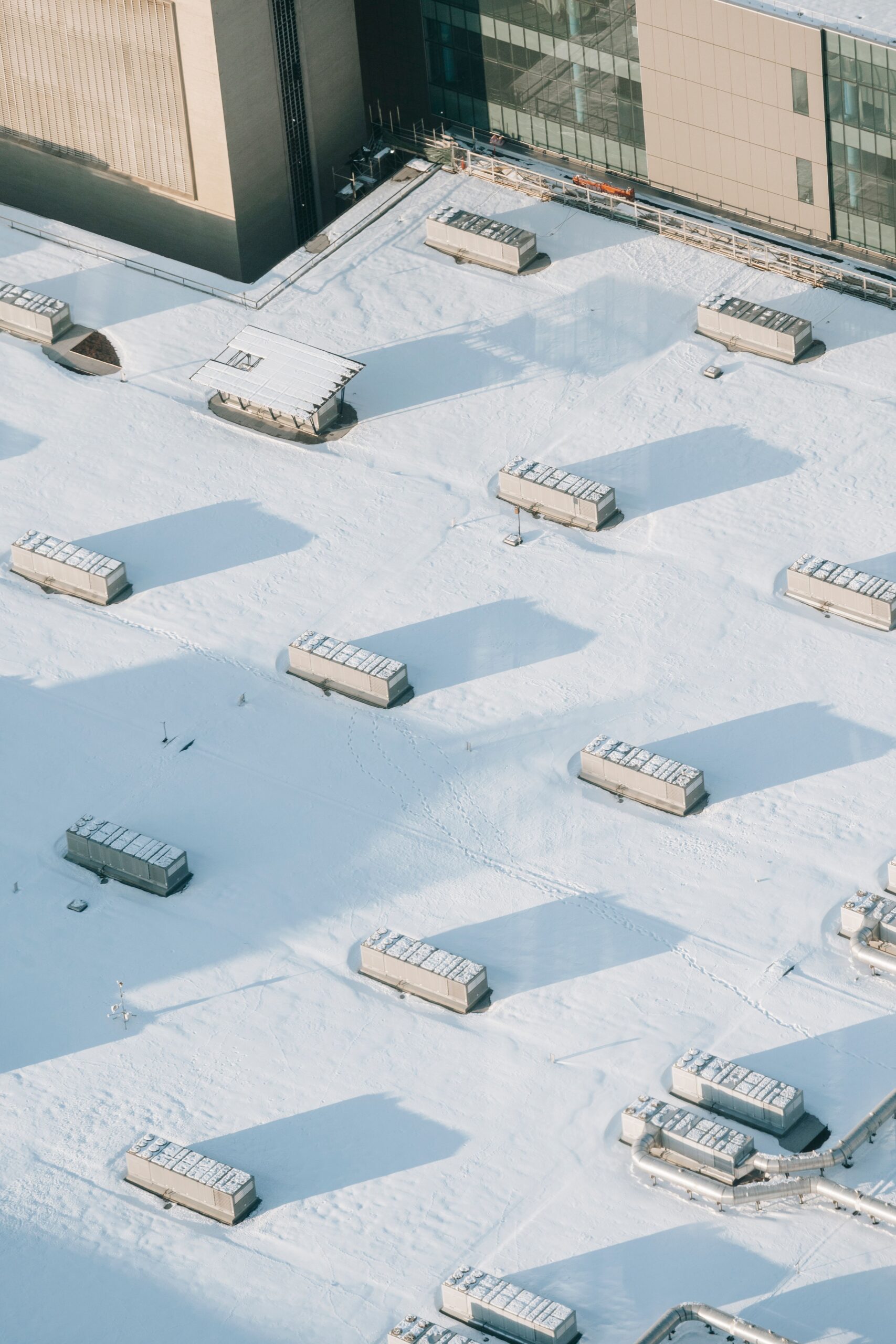
2. Walk the perimeter flashing.
Edge metal, coping and parapet flashings take the most wind and the most movement. Look for lifted laps, backed-out fasteners, open sealant joints and any place the membrane has pulled a ay from the vertical surface. Perimeter failures are the single most common source of winter leaks.
3. Check every rooftop penetration.
HVAC curbs, vent stacks, gas lines, conduit, satellite mounts, anything a technician has stood on since spring. Pitch pans dry out and crack. Sealant has a service life measured in a few years, not a few decades.
4. Look for ponding that never dries.
Water that is still sitting 48 hours after rain marks a low spot, and a low spot in November is an ice sheet in January. Ice moves, lifts seams, and cuts membrane as it refreezes.
5. Inspect seams and laps on single-ply.
On TPO and EPDM, run a hand along the seams near curbs and corners where most failures start. Any lifted edge you can catch a fingernail under is an opening for meltwater.
6. Note the interior stains you have been ignoring.
Walk the top floor ceiling with a flashlight. A faint ring over the storage room tells you where to look on the roof, and it is far easier to trace in October than in a February thaw.
7. Write down your snow removal plan now.
Decide ahead of time who clears the roof, at what snow depth, with what tools, and where the snow goes. Shovels and plastic scrapers only, never steel. More commercial membranes are damaged by well-meaning snow removal than by the snow itself.
What to do with what you find
Anything actively leaking should be addressed now, not in spring: see commercial flat roof repair. If your list is longer than a page, or nobody on staff is comfortable on a roof, a documented roof inspection gets you photos, priorities and budget numbers you can hand to an owner or a board.
Common winter roof questions
How much snow is too much on a commercial roof?
It depends on the building's designed snow load and the water content of the snow — wet, settled snow weighs several times what fresh powder does at the same depth. If you see deflection in the deck, doors that suddenly stick, or new cracks in interior finishes, get people out and call a contractor and a structural engineer.
Should we remove snow from a flat roof at all?
Usually only when it is drifting deep, when a thaw-freeze cycle has built ice, or when the design load is in question. When you do remove it, leave a few inches on the membrane and never use metal tools.
Can roof repairs be done once it is cold?
Temporary dry-in work can be done year-round. Permanent adhered work needs temperature, so we schedule it for a warm window or for spring, and we tell you which is which.
Our roof is 20 years old. Do we repair or replace this winter?
Repair through the winter to keep the building dry, then plan a replacement for the next building season when pricing is better and the work can be done properly. Get a written condition report first so you are budgeting from facts.